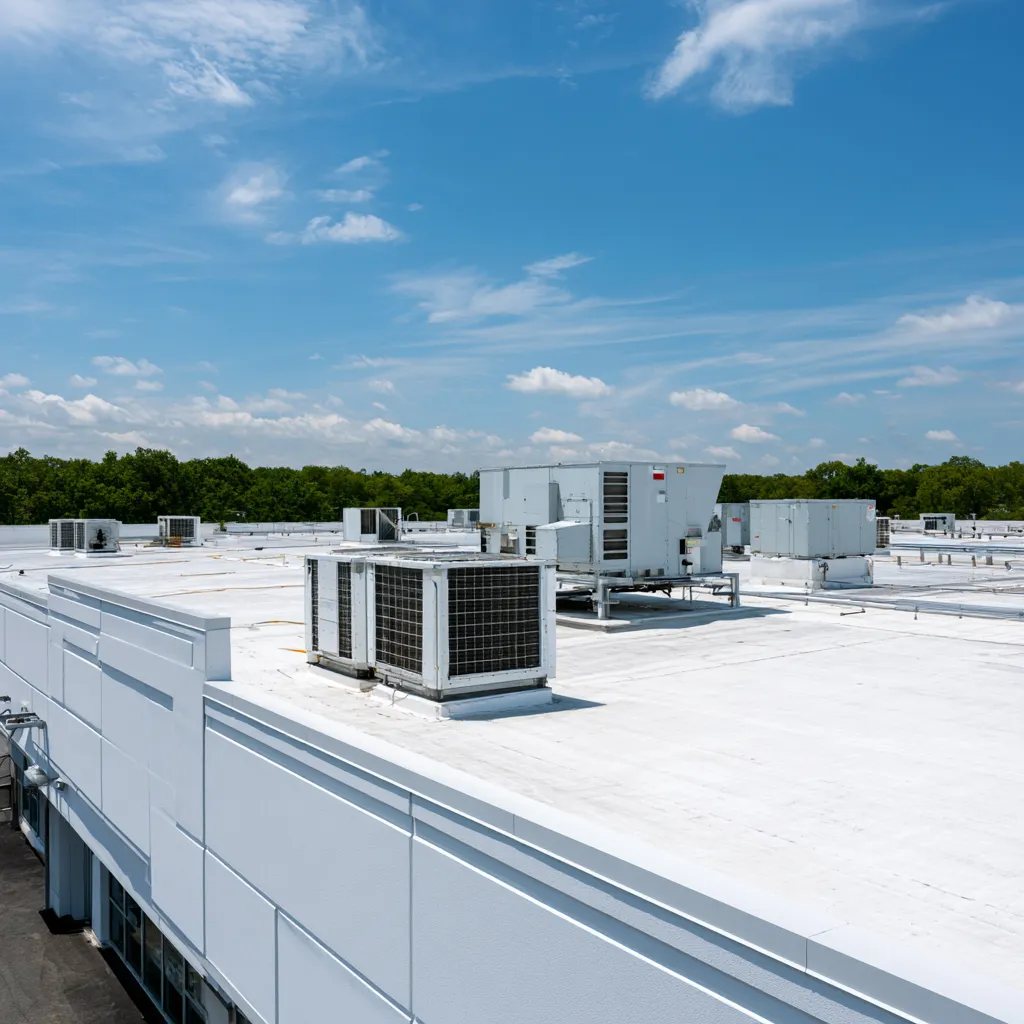
Commercial Roofing in Sachse, TX
Sachse's storefronts and light-industrial buildings off Highway 78 run flat, not shingled. A local roofer walks the membrane, grades every seam and drain, and logs it before quoting a number.
- Insurance jargon translated to plain words
- Workmanship terms spelled out in writing
- The same roofer, first walk to final nail
Call (469) 331-9625
What commercial roofing in Sachse actually looks like
For its size, Sachse keeps a modest set of commercial buildings, not a corridor of towers: retail strips and older storefronts along State Highway 78 and Ballard Avenue, a few light-industrial and warehouse buildings. Hardly any of it carries shingles, so these roofs run flat or low-slope, a single-ply membrane, built-up asphalt, or a coating.
The deck, drains, seams, and any moisture in the insulation get checked and set down with dated photos, so the real condition is on record first. It starts with a no-cost inspection.
The flat systems that go on Sachse buildings, and where each fits
There is no single best flat roof, only the one that suits the building: how the deck drains, how often anyone is up top servicing rooftop units, whether a kitchen hood vents across it, and how many more years you plan to own the place. The system gets chosen only after the roof is read and put on paper. These are the low-slope roofs installed and serviced on Sachse buildings, from a Highway 78 storefront to a light-industrial block on the edge of town.
TPO
The pale sheet most small-retail flat roofs end up under. It is a thermoplastic membrane whose seams are welded shut with hot air into one continuous surface, and its light color sends the Texas sun back up instead of soaking it in, which takes some strain off the rooftop cooling.
EPDM
A black rubber membrane that trades appearance for endurance. Left largely alone it runs for decades over a wide, open deck, which is why it suits a warehouse or a light-industrial floor with little rooftop clutter to work around.
PVC
A welded sheet made for the roofs a kitchen punishes. Grease, animal fats, and fryer exhaust that break down ordinary membranes bead off it, so a cafe on Ballard Avenue or any building venting a hood upward is where it belongs.
Modified bitumen
Asphalt reinforced and layered in rolls, a membrane that takes regular foot traffic and a corner slow to drain without complaint. It tends to show up on the smaller roofs someone climbs often to tend rooftop equipment.
Built-up roof (BUR)
The old tar-and-gravel method, ply stacked on ply until the roof is thick and forgiving. It asks more labor than a rolled membrane, but a century of proven service is why it still caps some of Sachse's longest-standing buildings.
Roof coatings
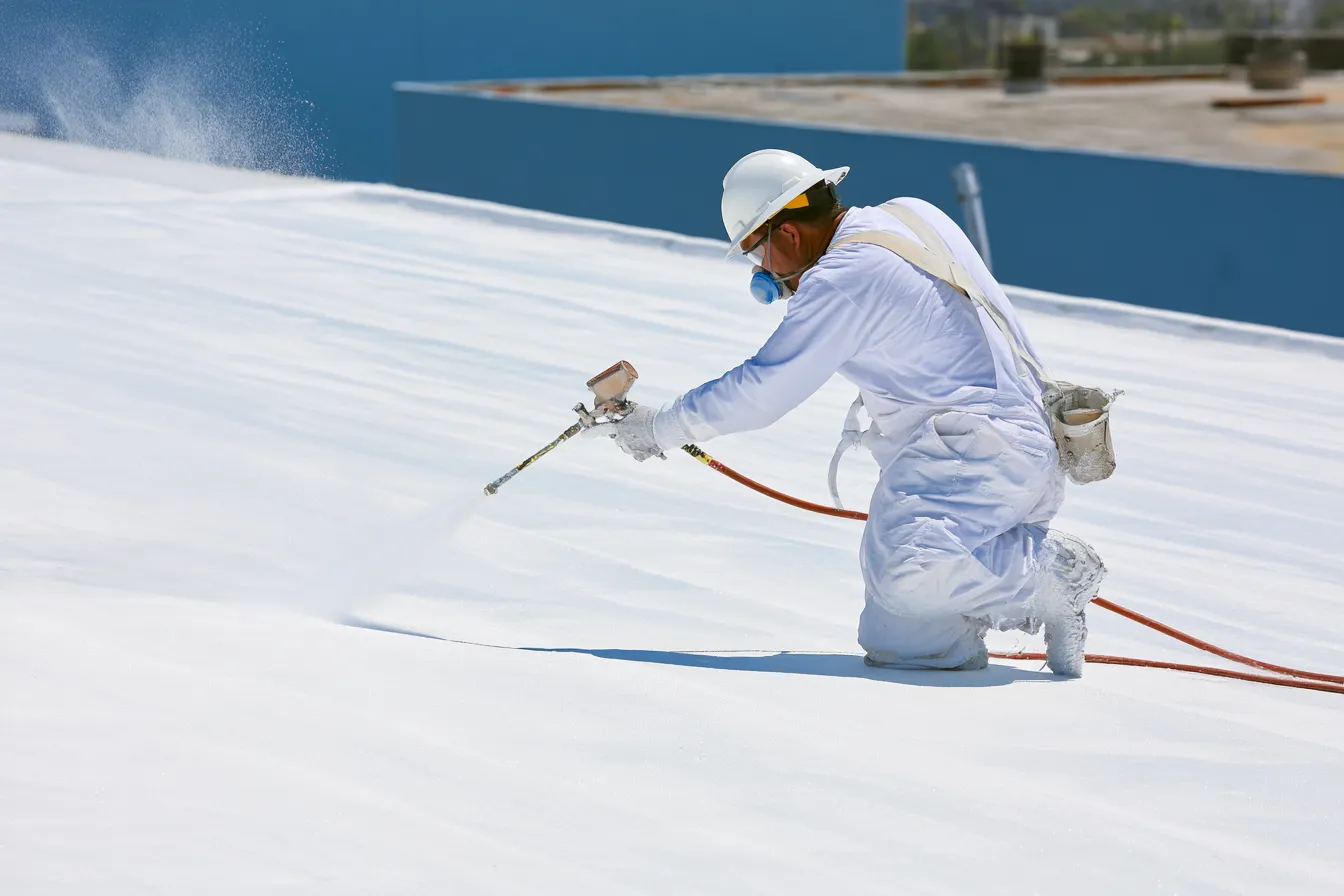
A silicone or acrylic layer sprayed or rolled across a roof that is worn but still solid beneath, buying back reflective years for a slice of a tear-off. It only holds if the roof tests dry first; over wet insulation the coat just seals the water in.
Not sure what is even up there, or what a rough hailstorm has quietly taken out of it? That is what the read settles: a local roofer names the membrane, puts a number on the years it has left, and dates any storm bruising before you have to choose between a repair and a re-roof. For what those paths tend to run, the roofing cost guide lays out ranges by system.
From one seam to a full re-roof, and the honest call between them
Nearly every commercial job in Sachse fits one of four buckets. A local roofer places your building in the right bucket and names that choice in writing before a crew gets booked.
- 01Flat-roof repair, kept to the failure
- One problem fixed on its own instead of the whole roof: a seam starting to lift, a drain holding a puddle, a length of parapet flashing gone brittle, or a leak where a rooftop unit meets its curb, each traced back to whatever membrane is already up there.
- 02A coating, only where the roof earns it
- When the deck under the membrane tests dry and sound, a sprayed silicone or acrylic coat can renew the surface and add years for a small share of a full replacement. Over insulation that has taken on water it only seals the trouble in, so the moisture check comes first, never after the number.
- 03A full re-roof when the system is spent
- A new low-slope system, single-ply, modified bitumen, or built-up, sized and fastened to stand the wind that crosses this open ground, chosen only once a roof is truly finished and no patch is worth chasing.
- 04The straight patch-or-replace read
- Whether a coat is money well spent or a tear-off is the right answer comes down to four things: how much the roof gets walked, whether water sits in the insulation, what shape the deck is in, and how long you mean to keep the building. A roofer measures all four before advising, not after the work is sold.
Hail treats a flat roof no gentler than a pitched one; it just hides the damage, since a bruised membrane or a split seam gives nothing away from the parking lot. A local roofer records and dates it on that first visit, then reads whether a claim is worth filing. What a flat roof shows after a storm is covered on the storm damage page.
Before you commit a Sachse building to a new flat roof
Plain answers on choosing a system, storm damage you cannot see from the ground, working around tenants, and where the warranties actually sit.
Q1Is there even enough commercial work in a town this size to take it seriously?
Q2How do I know whether to coat the roof or replace it?
Q3A tenant keeps reporting a drip, but the roof is not old. What is going on?
Q4If a storm totals the membrane, who documents it, and does Bluestem file the claim?
Q5How long should a new flat roof last before I am back in this conversation?
Q6Who stands behind a new commercial roof, the manufacturer or the roofer?
Get the facility roof on the record.
A commercial roofer walks the system, records the membrane and flashing condition, and returns a written scope with a budget figure for the building. The walk is free and the timing is yours.